West Memphis: From 22% Chronic Absence to 5% in a Delta District
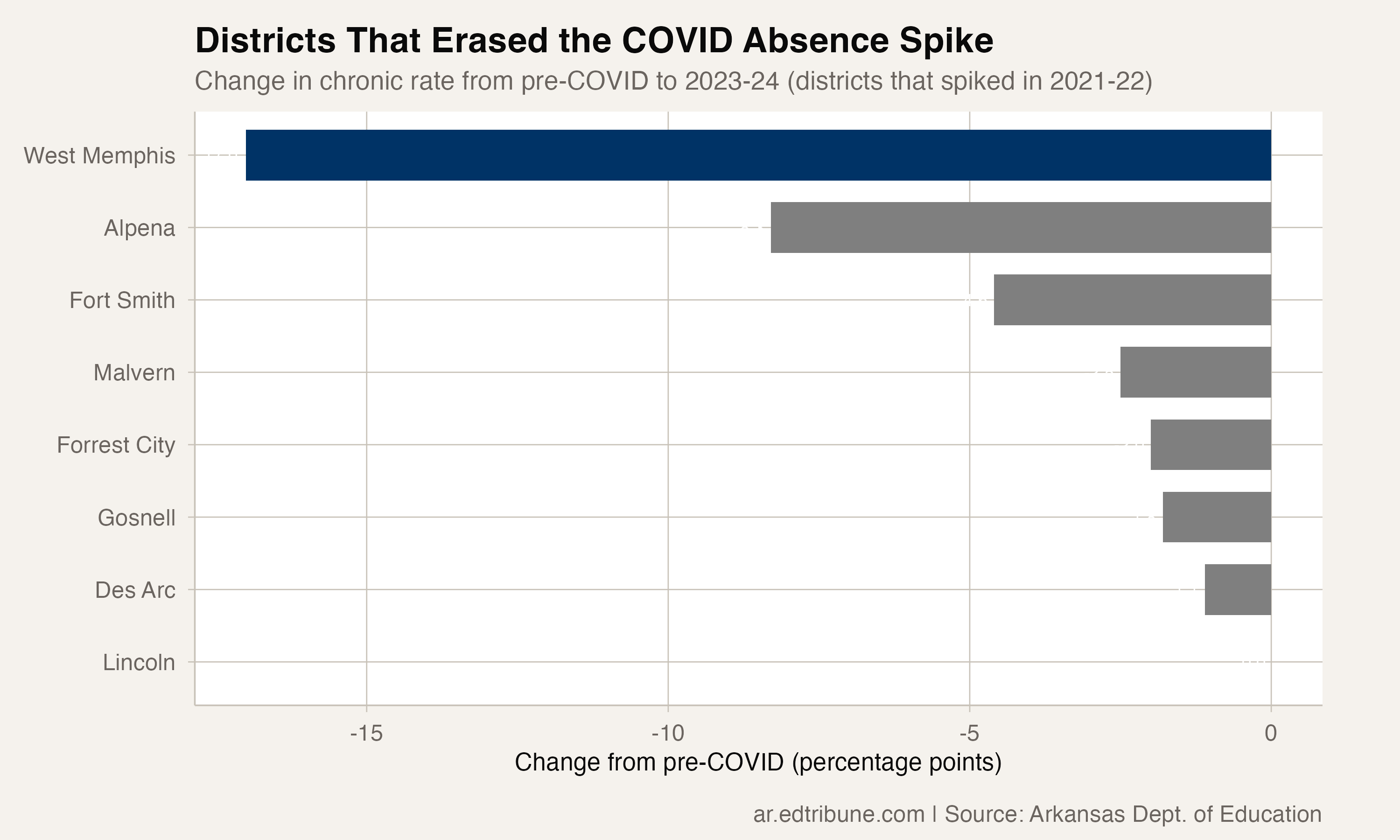
West Memphis cut chronic absenteeism from 22% to 5% in five years, while Arkansas's statewide rate climbed to a record 27.7%.
Data-Driven Education Journalism for the Natural State
Page 2 of 3
West Memphis cut chronic absenteeism from 22% to 5% in five years, while Arkansas's statewide rate climbed to a record 27.7%.
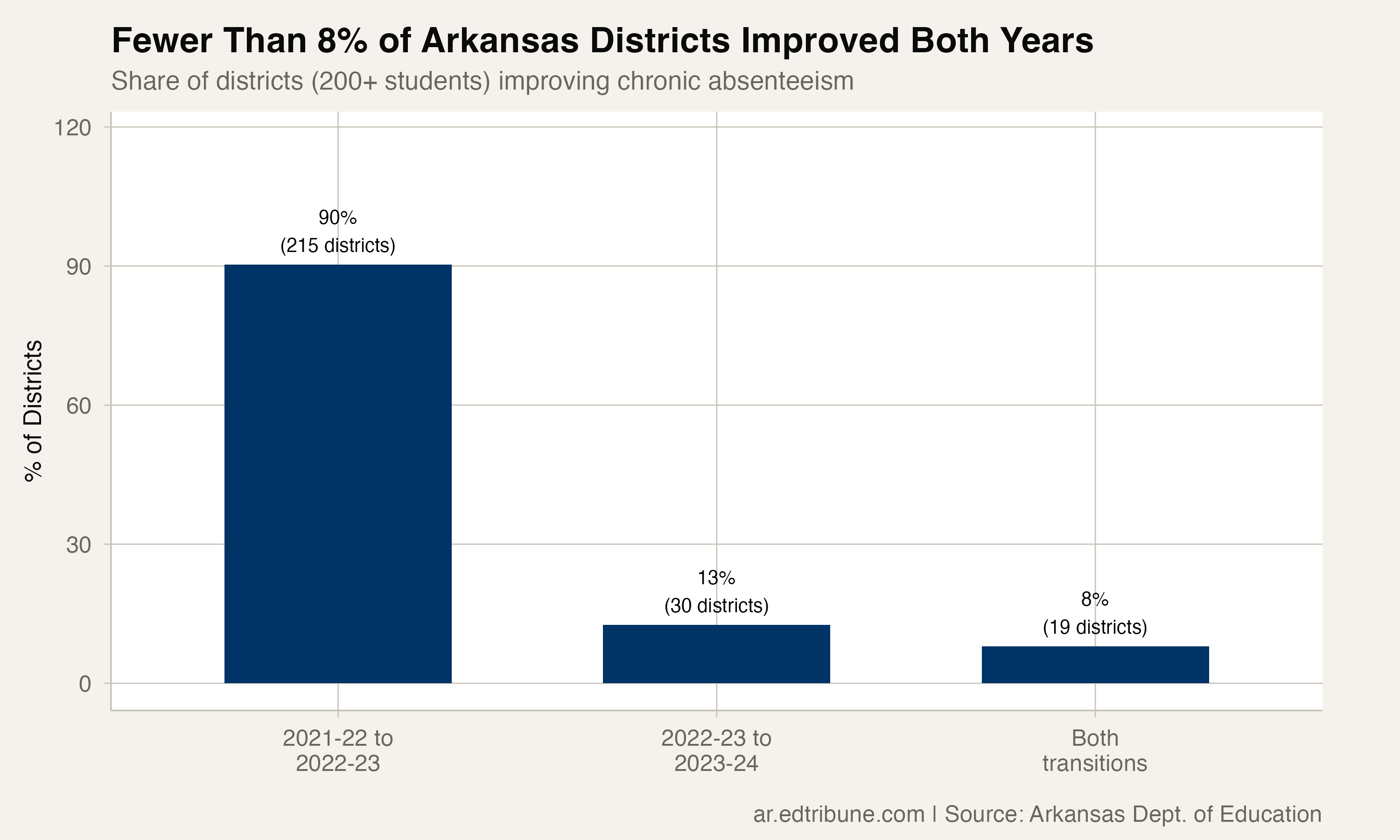
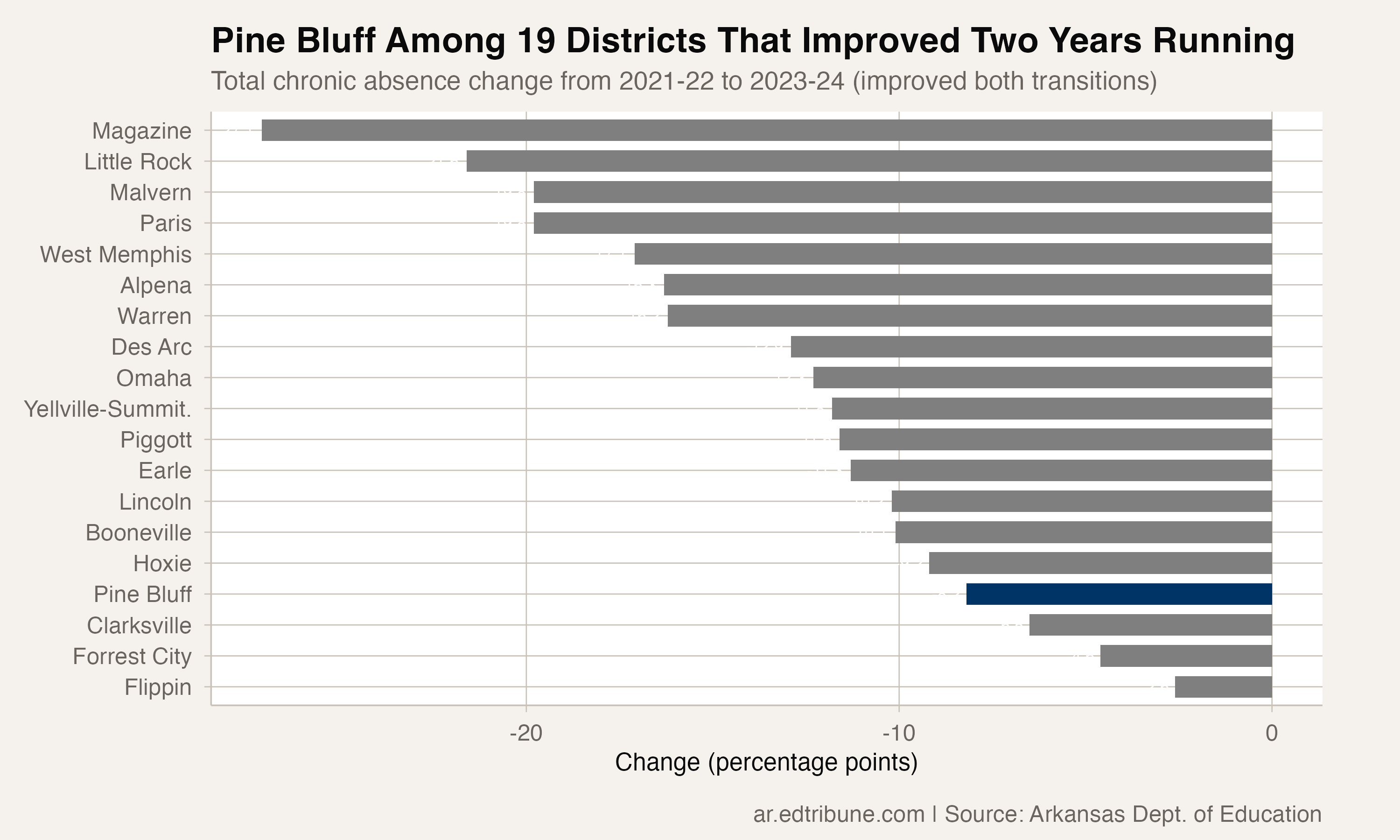
Only 19 of 240 Arkansas districts improved chronic absenteeism in two consecutive years. They span every geography and every size. Here's what they share.
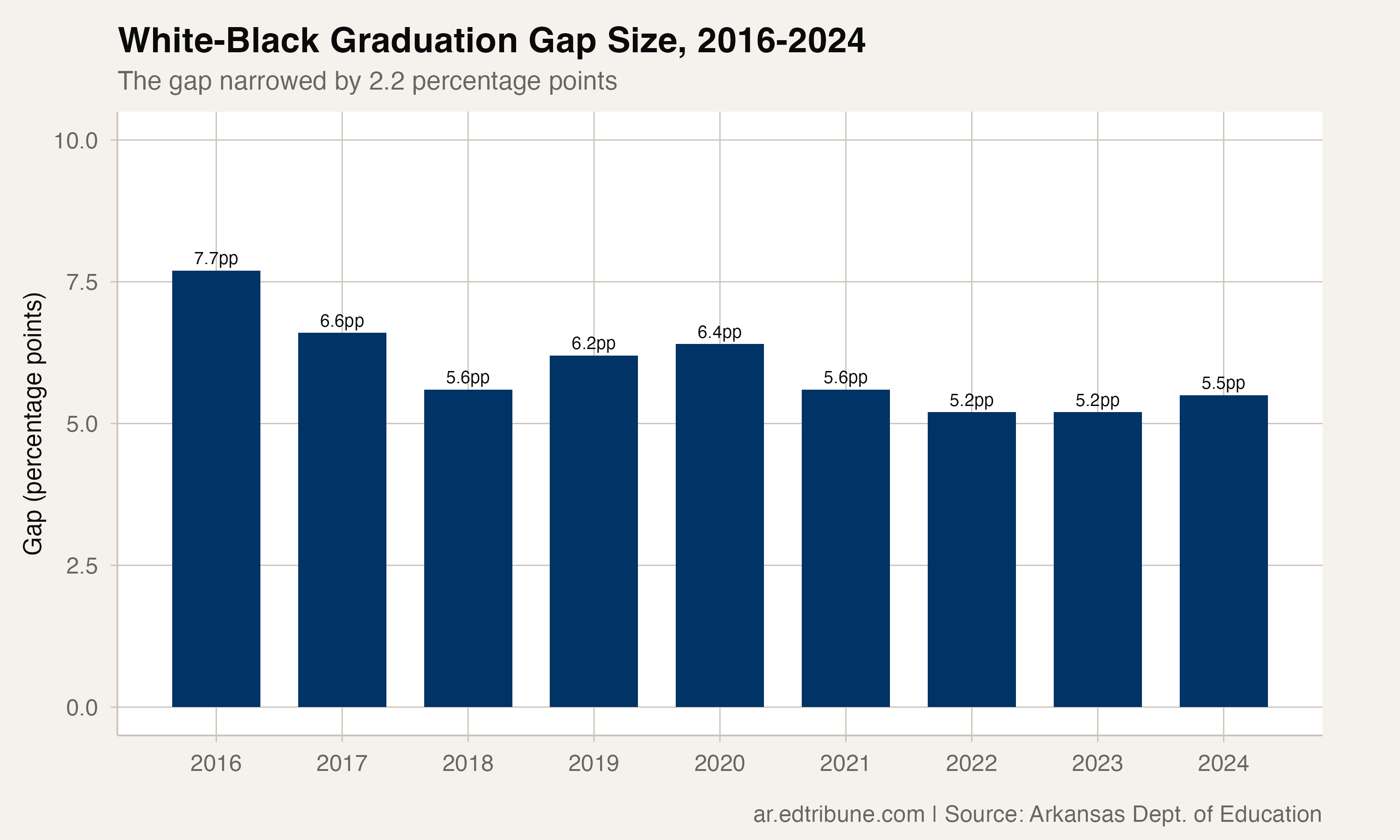
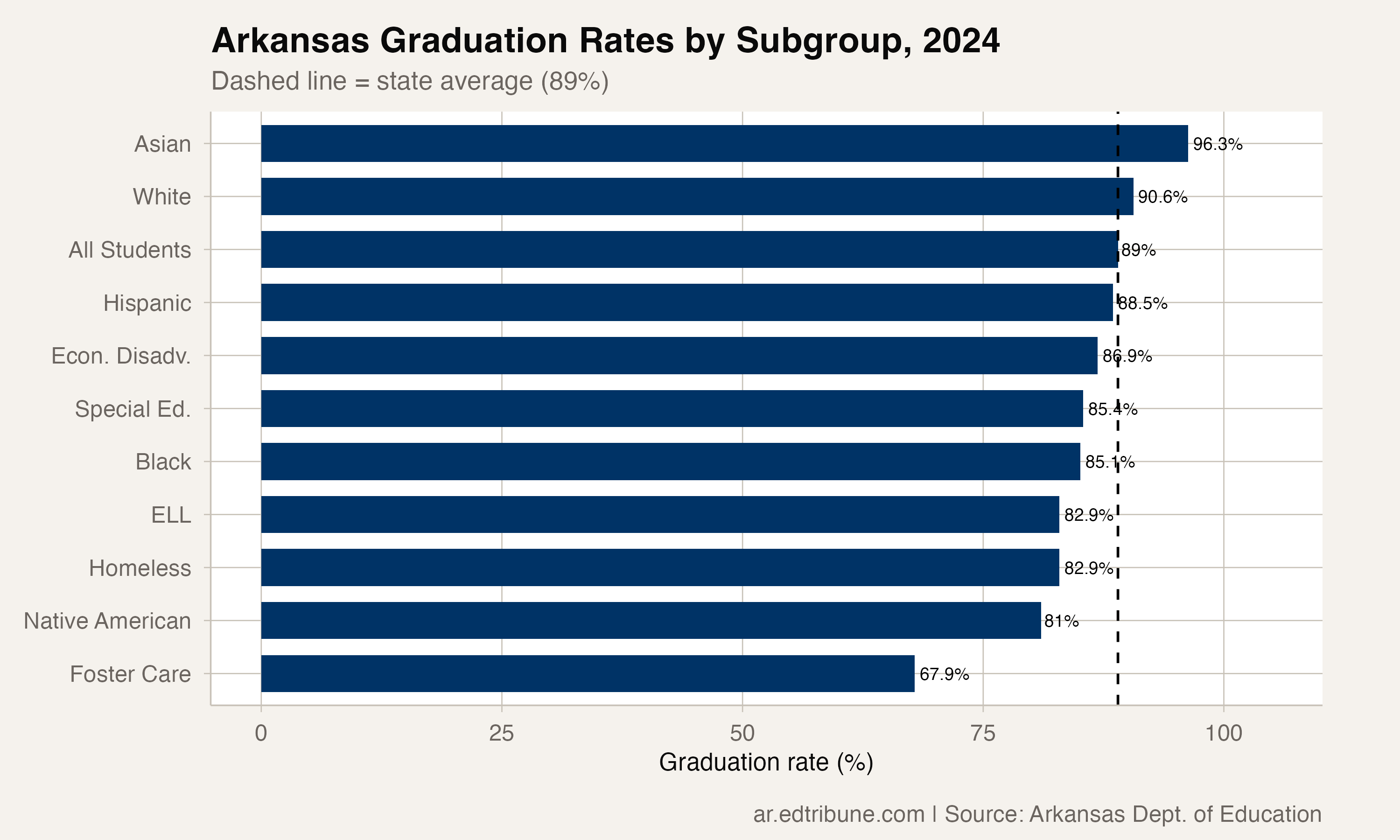
Arkansas graduates 89% of students, 2 points above the national average, with gains across every racial subgroup since 2016.
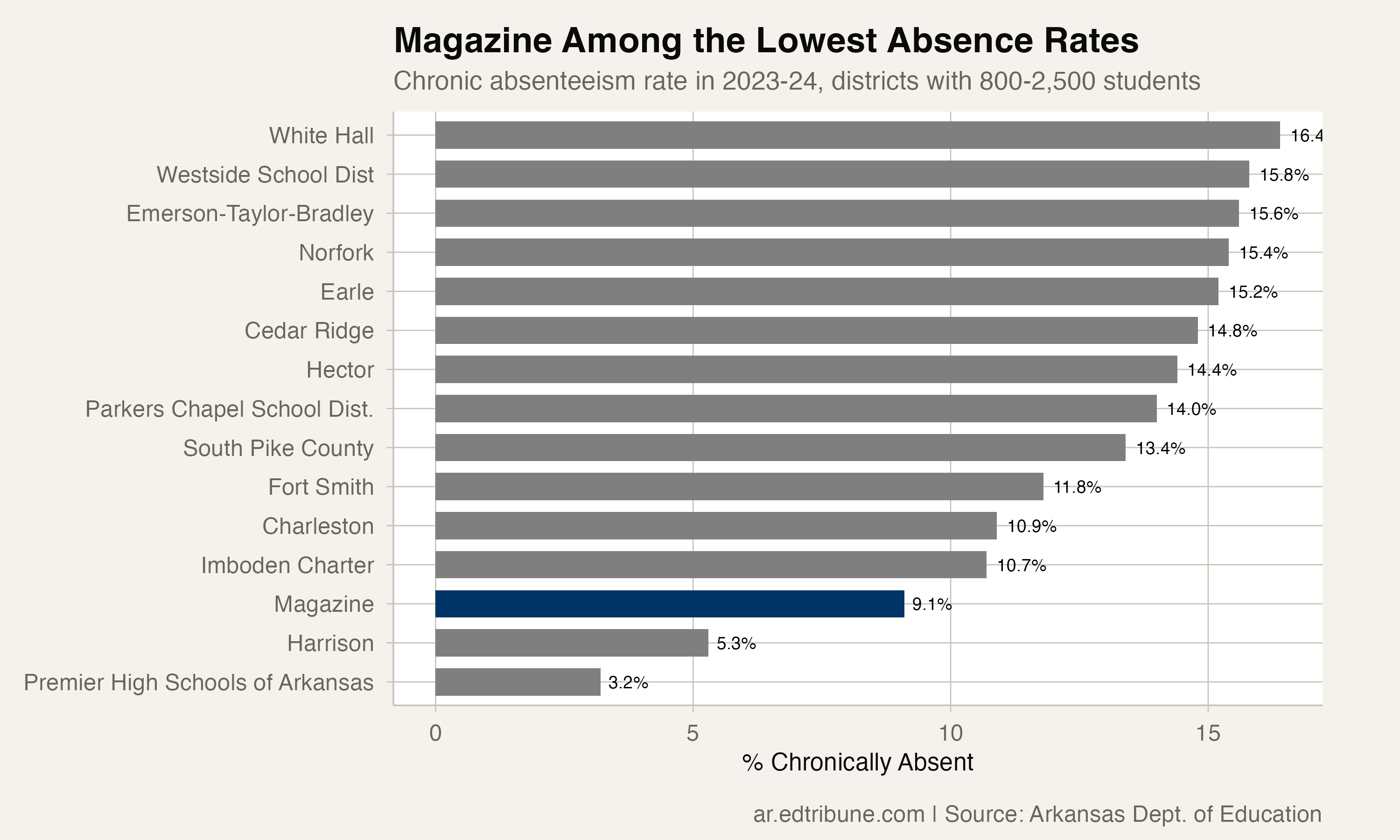
Magazine School District adopted a continuous calendar before COVID and has since recovered faster than nearly any district in Arkansas, cutting chronic absence from 36% to 9%.
Pine Bluff was taken over by the state for failing schools. Under new leadership, the district has cut chronic absenteeism from 19% to 11% and won back local control.
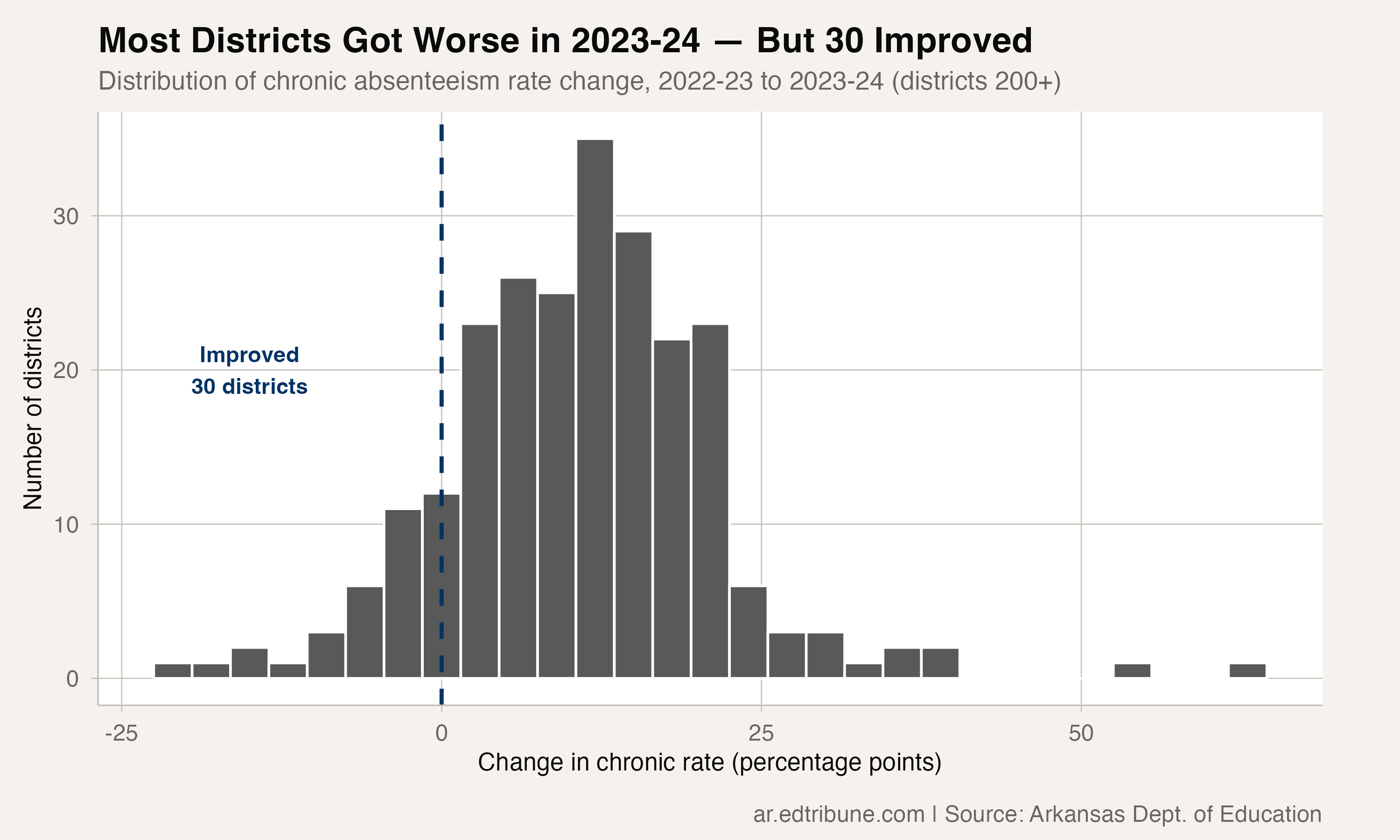
In 2023-24, Arkansas hit a record 27.7% chronic absence rate and 87% of districts got worse. These 30 districts went the other direction.
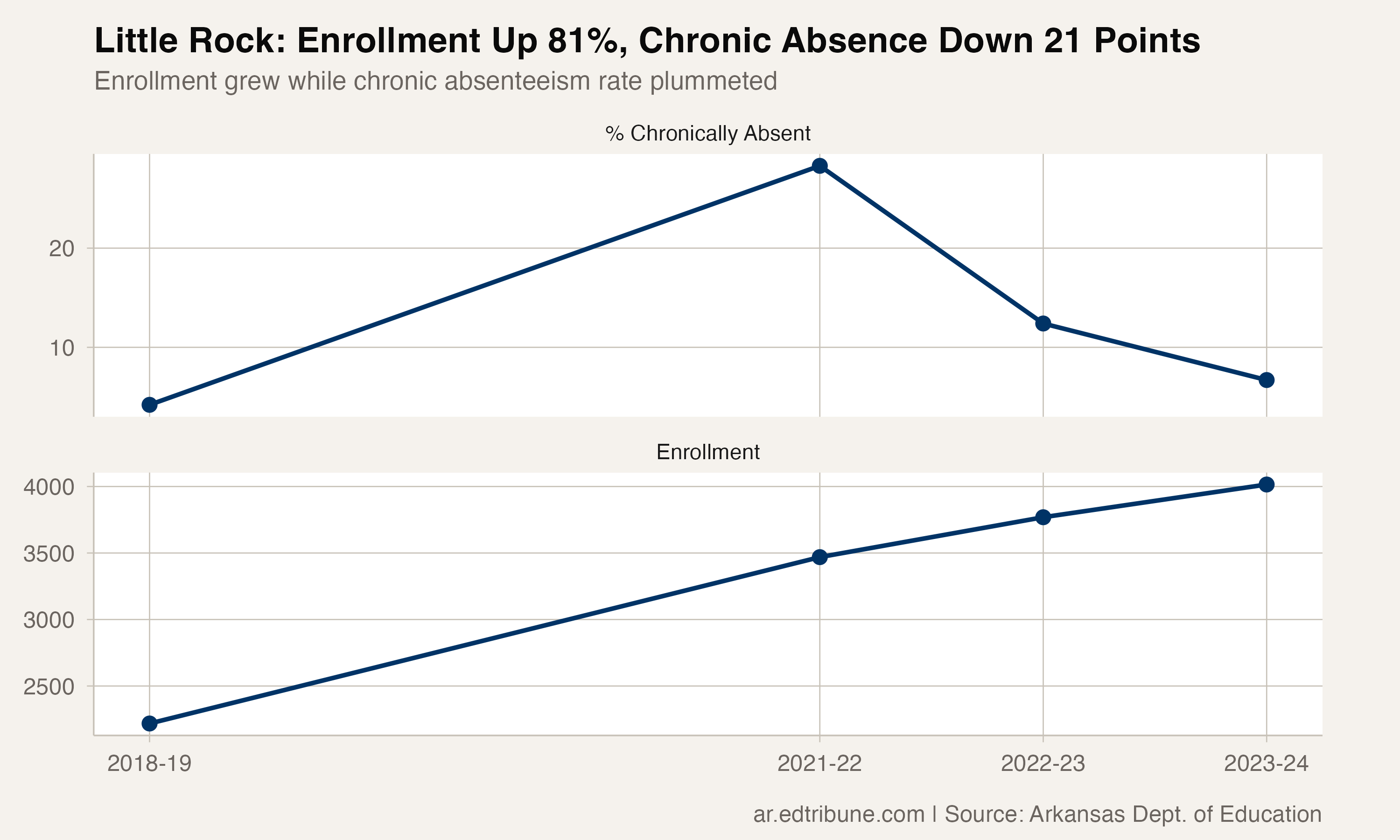
Arkansas's state capital district pulled off a rare feat: growing enrollment by 81% while slashing chronic absenteeism from 28% to under 7% in two years.
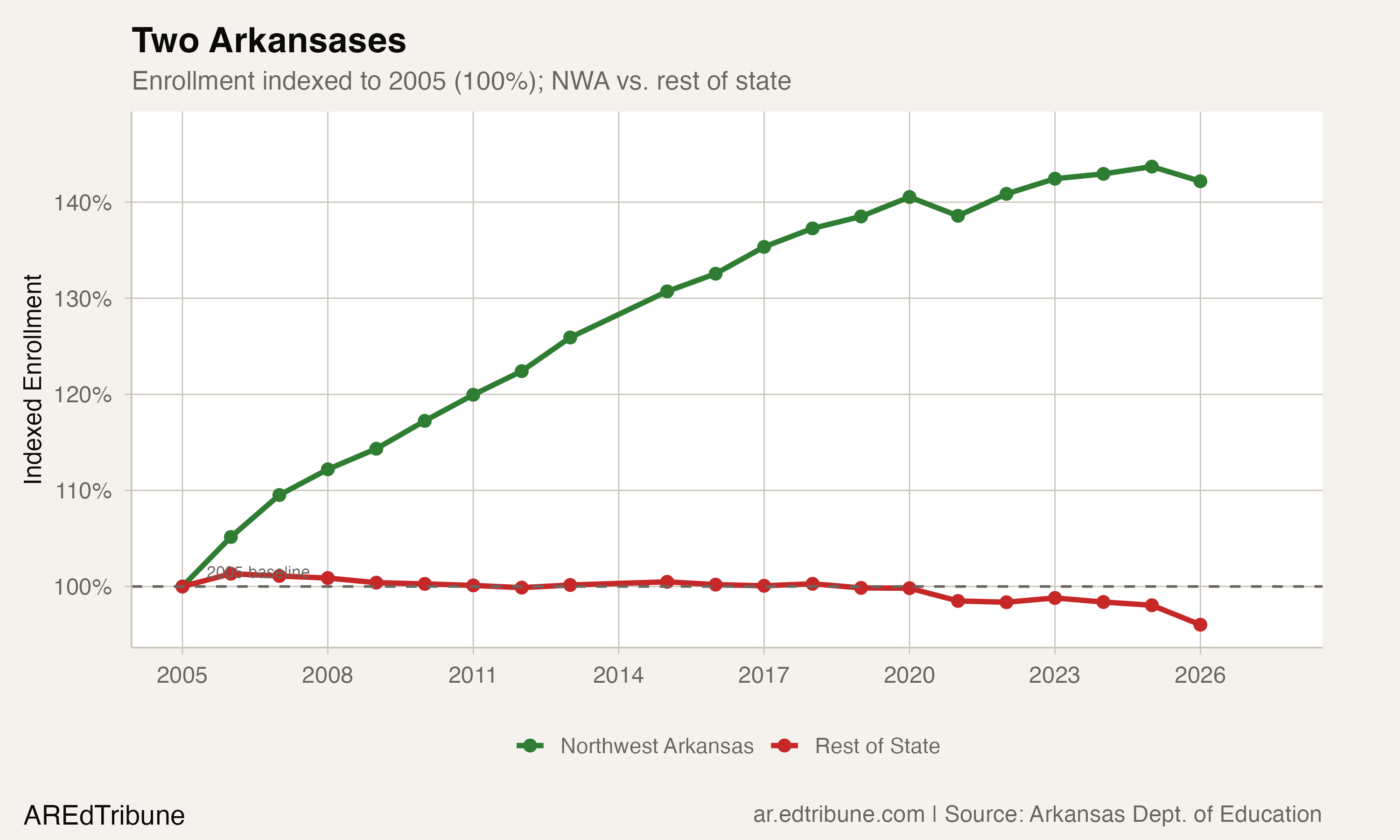
More than a third of Arkansas districts are at their lowest enrollment since 2005, while growth concentrates in NWA suburbs and charter schools.
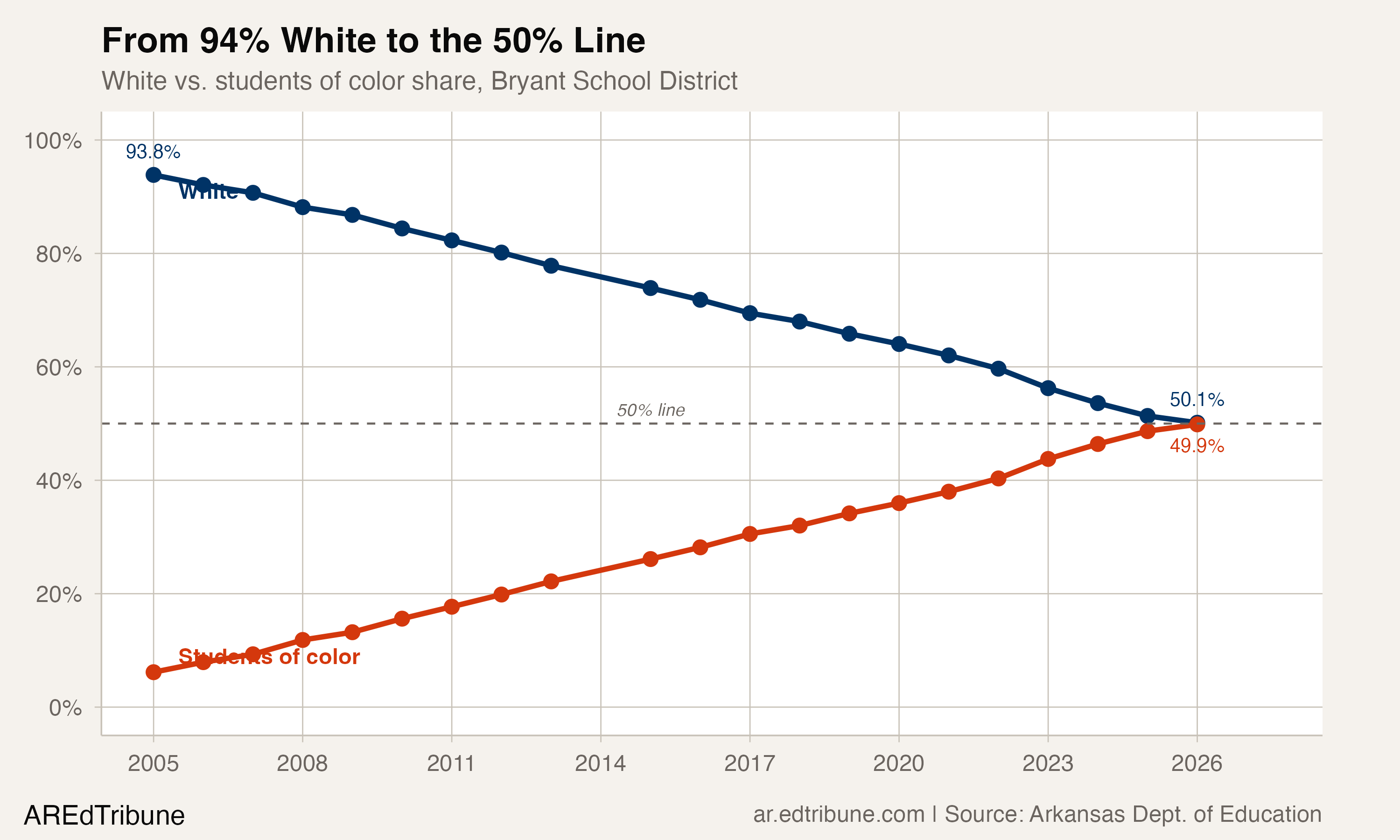
Bryant School District's white enrollment share fell 44 percentage points in 21 years, but total enrollment grew 43%. It is the largest growth-driven demographic shift in Arkansas.
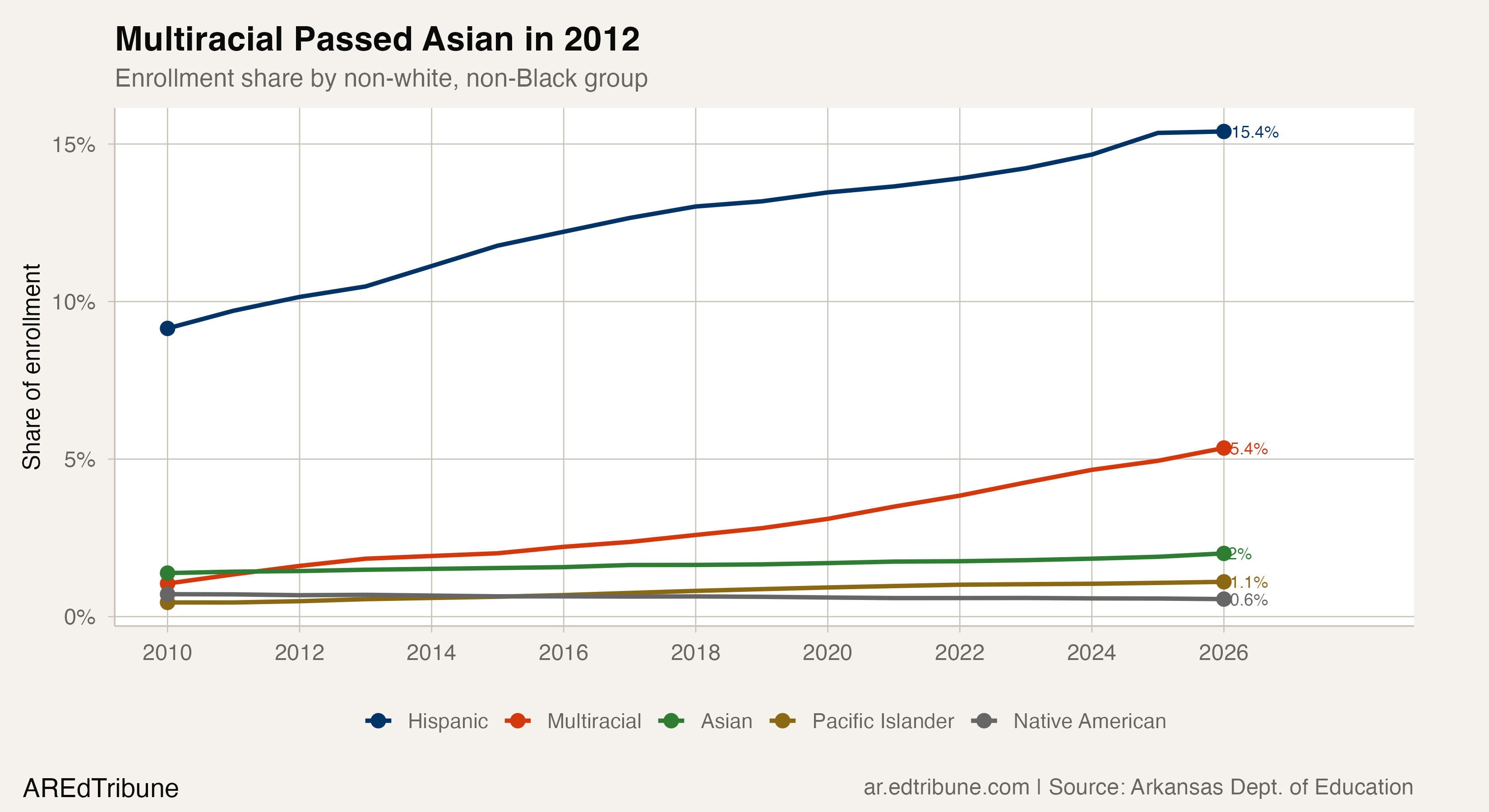
Multiracial enrollment grew 408% since 2010, making two-or-more-races the fastest-growing demographic group in Arkansas schools by a wide margin.
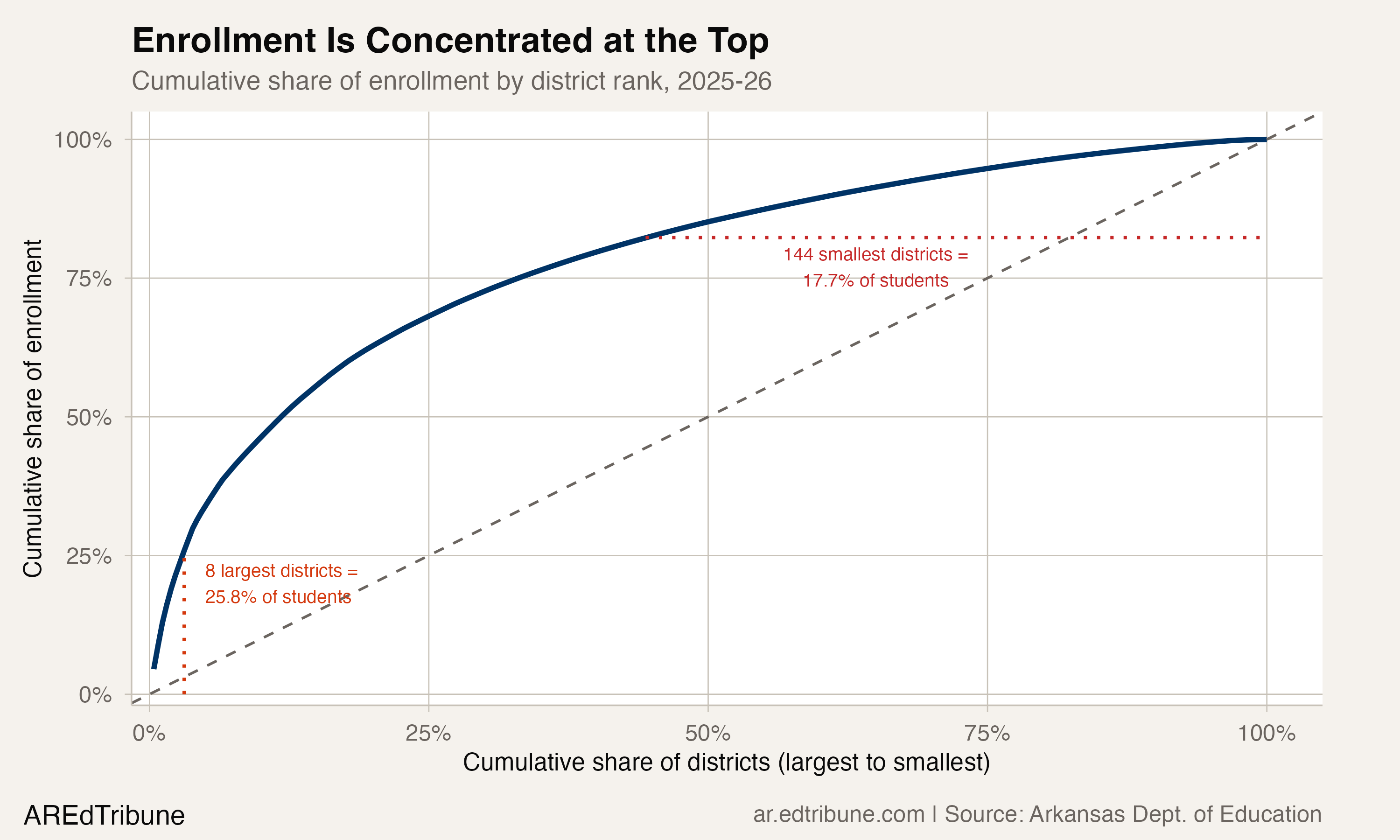
More than half of Arkansas's 259 school districts enroll fewer than 1,000 students, but together they educate only 17.7% of the state's children.
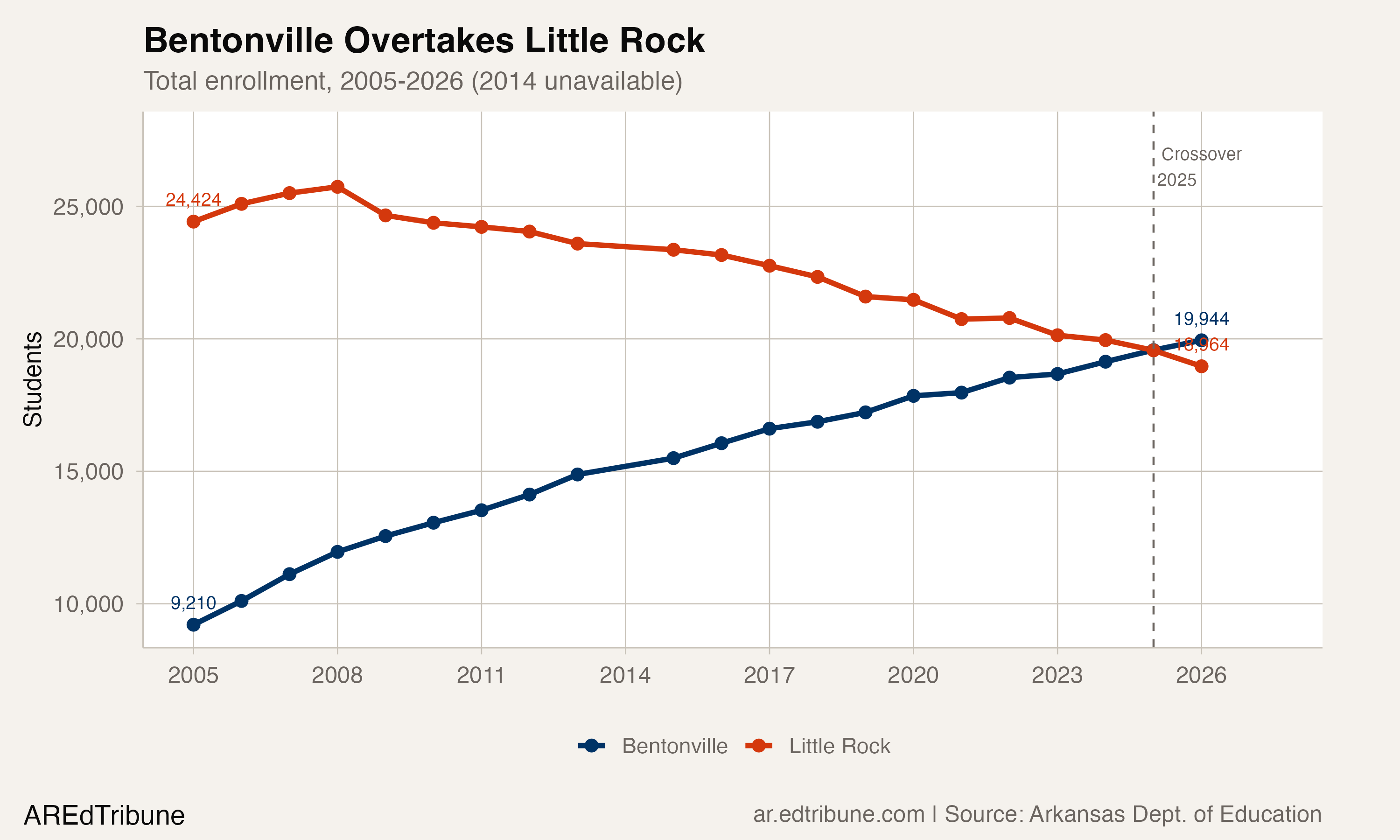
Fueled by Walmart's economic engine, Bentonville has doubled in size since 2005 while Little Rock lost a quarter of its students. The crossover happened last year.
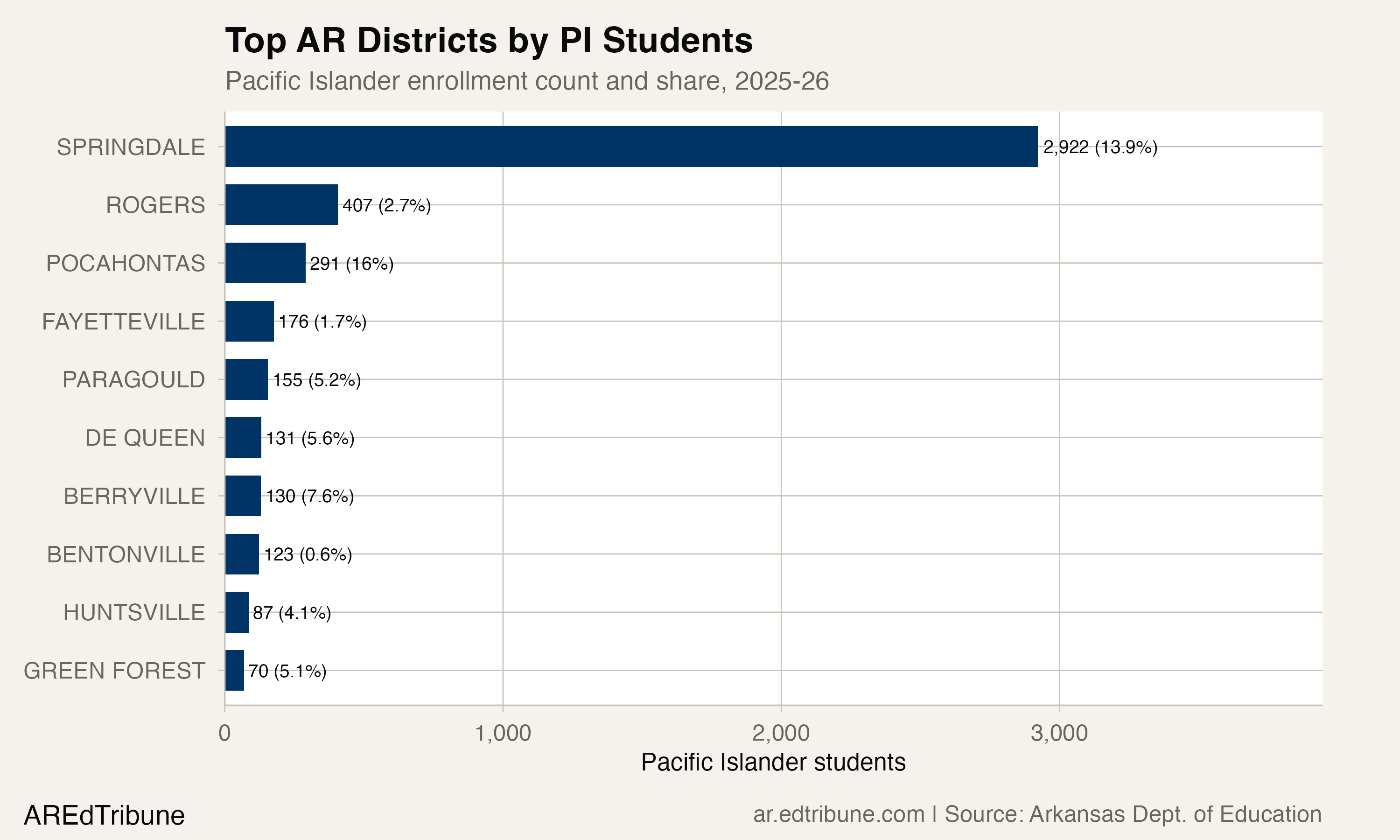
Springdale enrolls 2,922 Pacific Islander students, 13.9% of its total and 56.8% of all PI students in Arkansas, driven by the largest Marshallese diaspora community in the continental US.
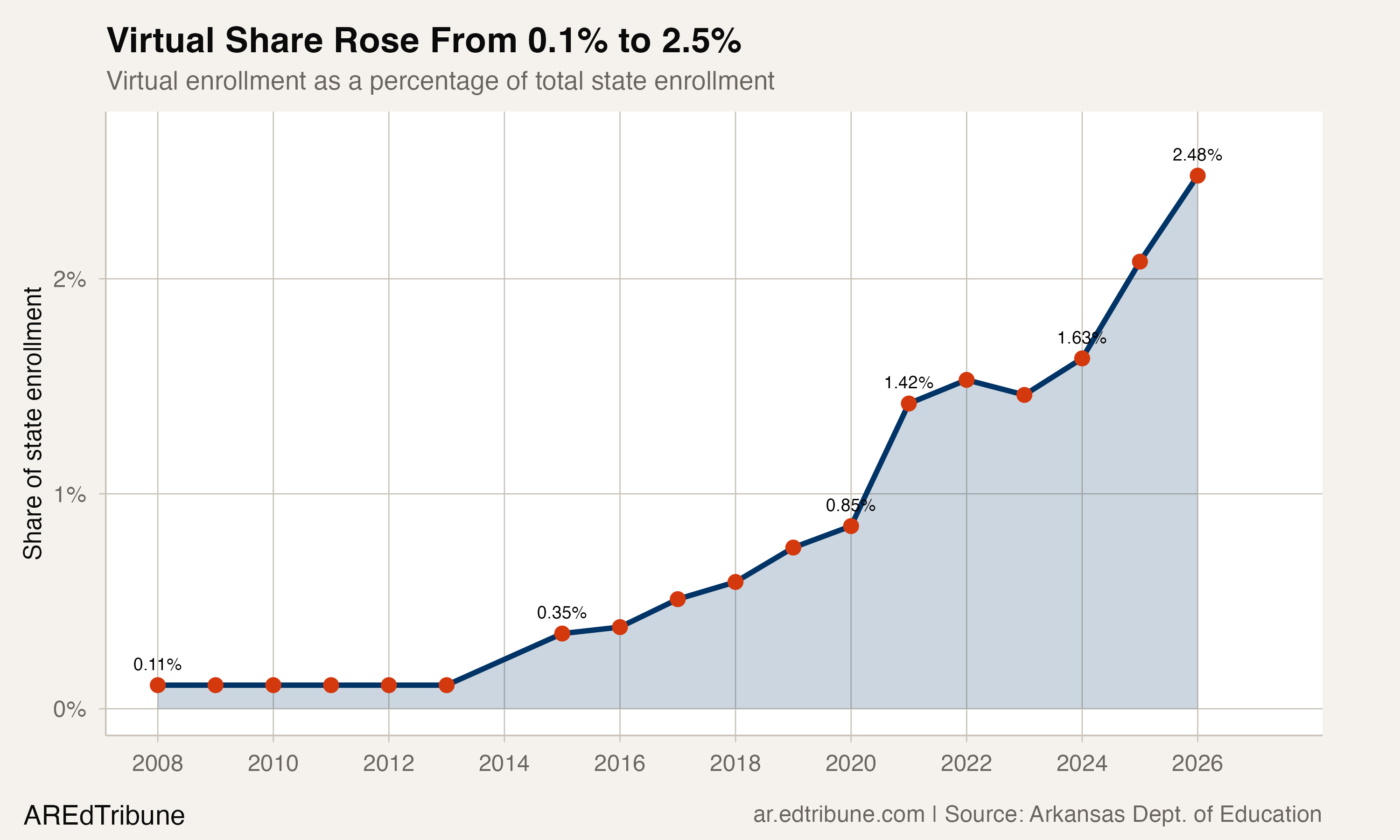
Arkansas's two virtual schools enrolled 11,559 students in 2025-26, nearly tripling since 2020 and capturing 42% of all enrollment growth statewide.
Four Northwest Arkansas districts grew from 9.8% to 14.2% of state enrollment since 2005, gaining 21,488 students while the Delta lost nearly as many.