Personnel
Vick Barrett Puts Staff Support at Center of Poyen Transition
Vick Barrett says Poyen's next chapter starts with staff support, student success and steady growth as he moves from principal to superintendent.

Data-Driven Education Journalism for the Natural State
Education News & Data
Local education reporting from every corner of Arkansas, grounded in Arkansas Department of Education data.
Forrest City's superintendent ran the district on an interim basis from March before the board made the appointment permanent in July. He says stability came first and systems come next.
Lavaca has lost 14.2% of its students since 2014-15, the steepest fall of the five conventional districts in Sebastian County. Its 2024-25 reading results beat the statewide median campus in four of the eight grades it publishes.
After a career across the district, Toshiba Pugh says families should see improvement in staffing, cleanliness and safety as she leads Osceola through sustained enrollment decline.
Susan Blockburger says Riverview's next year starts with continuity, student supports and a small-school atmosphere as she serves as interim superintendent.
Vick Barrett says Poyen's next chapter starts with staff support, student success and steady growth as he moves from principal to superintendent.
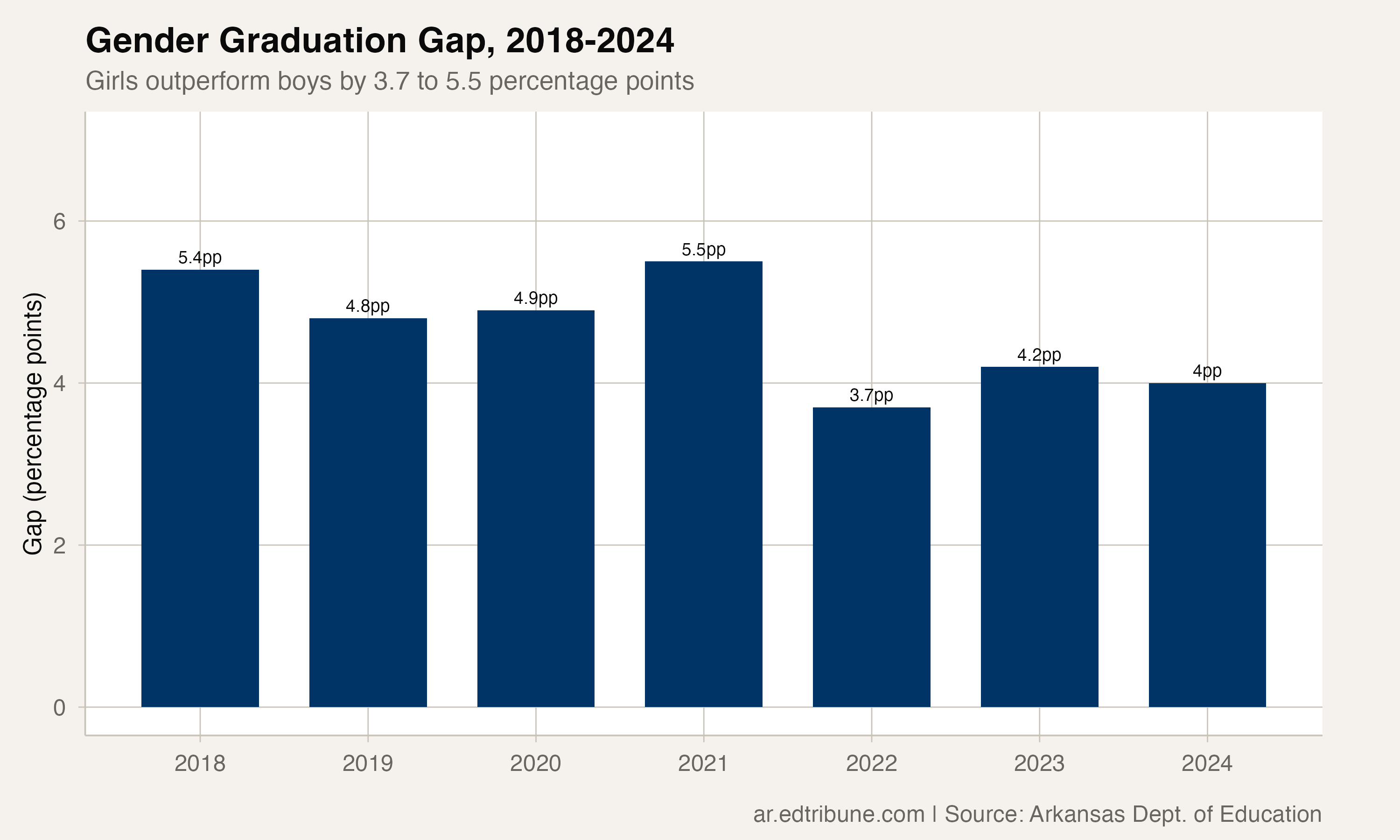
Arkansas's female-minus-male graduation gap moved from 5.4 points in 2018 to 4.0 in 2024, narrowing in three annual intervals and widening in three.
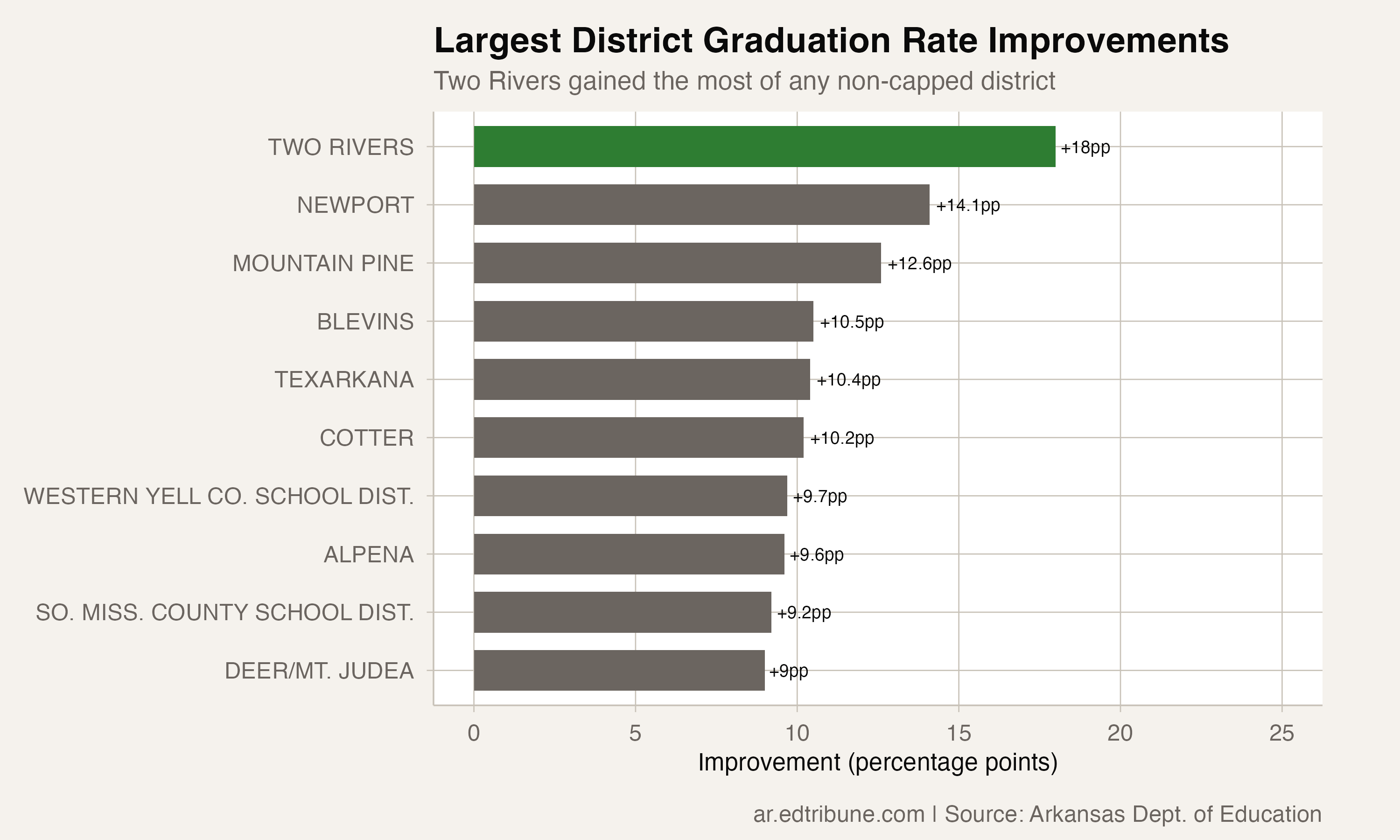
Two Rivers gained 18 points on its graduation rate in three years, climbing from 71.2% to 89.2% — the largest improvement of any Arkansas district.
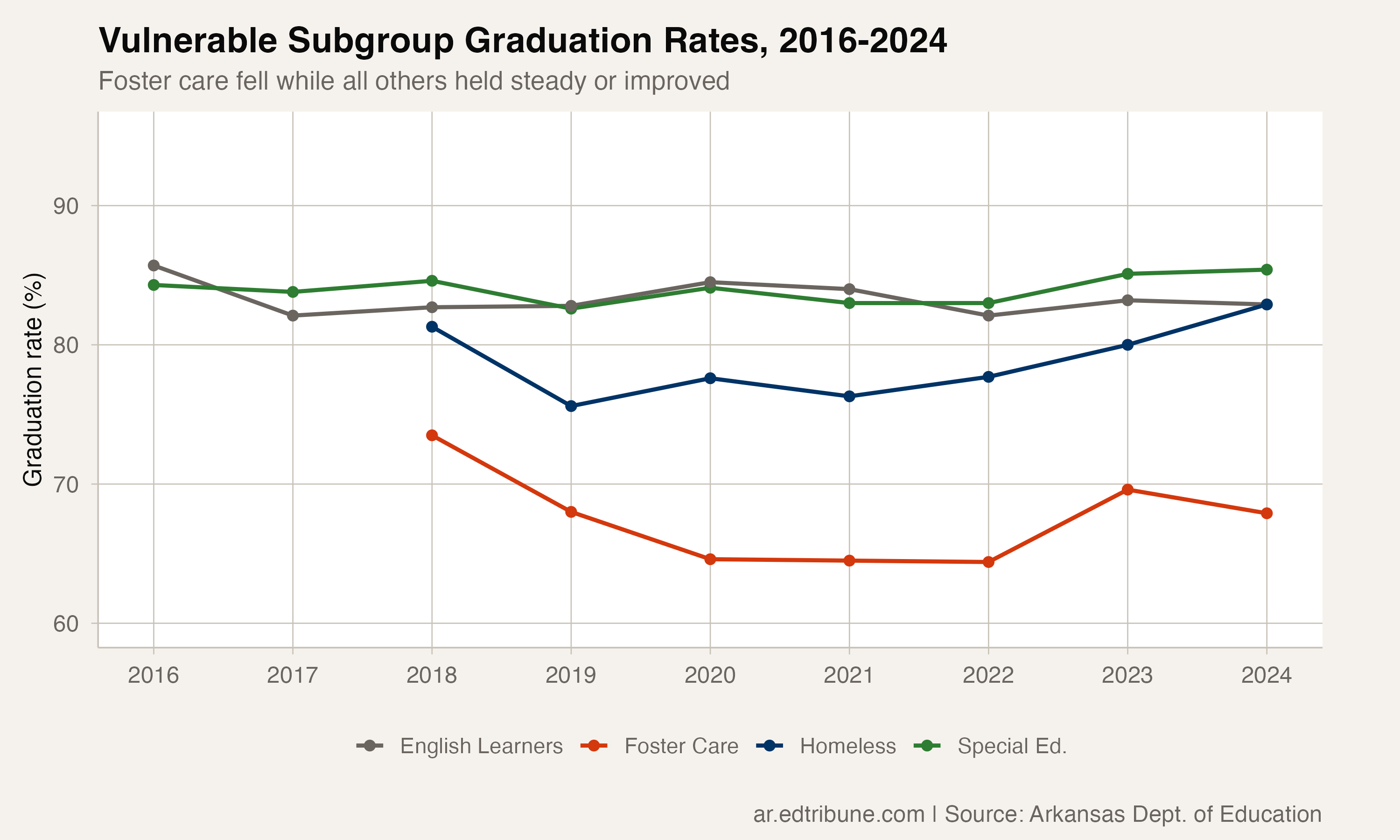
Arkansas's foster-care graduation rate fell from 73.5% in 2018 to 67.9% in 2024, the largest decline among 18 subgroup series with both endpoints.
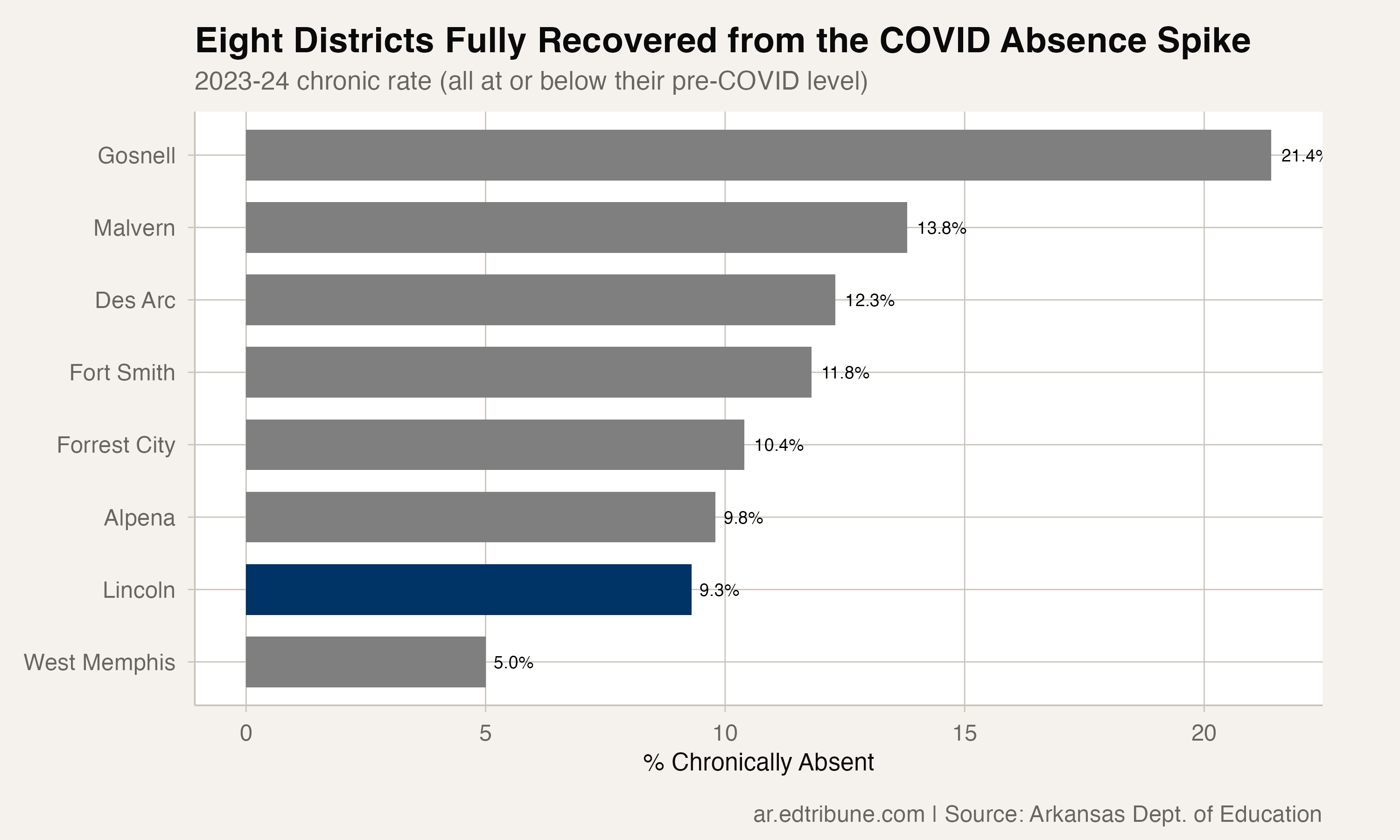
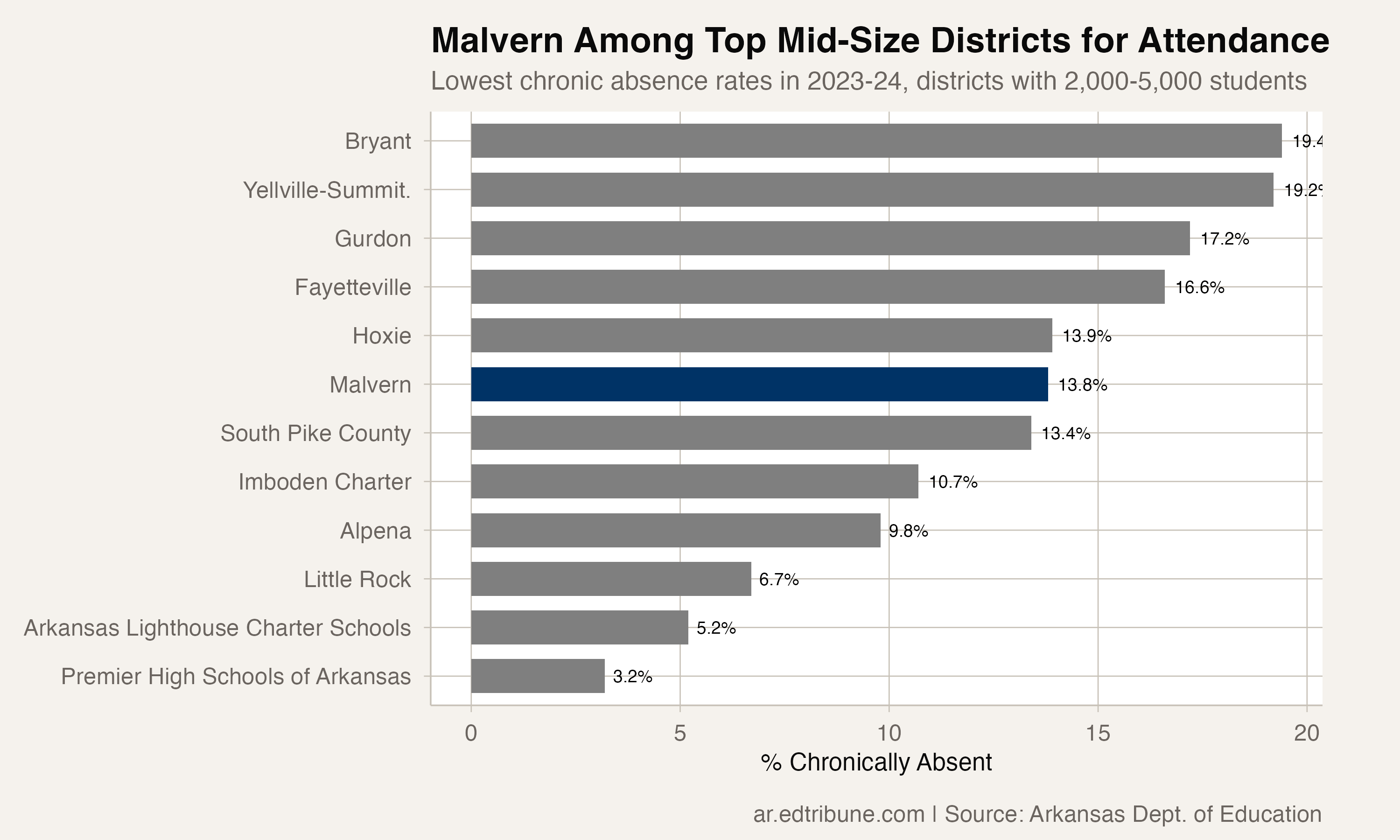
Malvern School District spiked to 34% chronic absence in the COVID era, then improved every year since, landing at 13.8% — below its pre-COVID rate and half the state average.
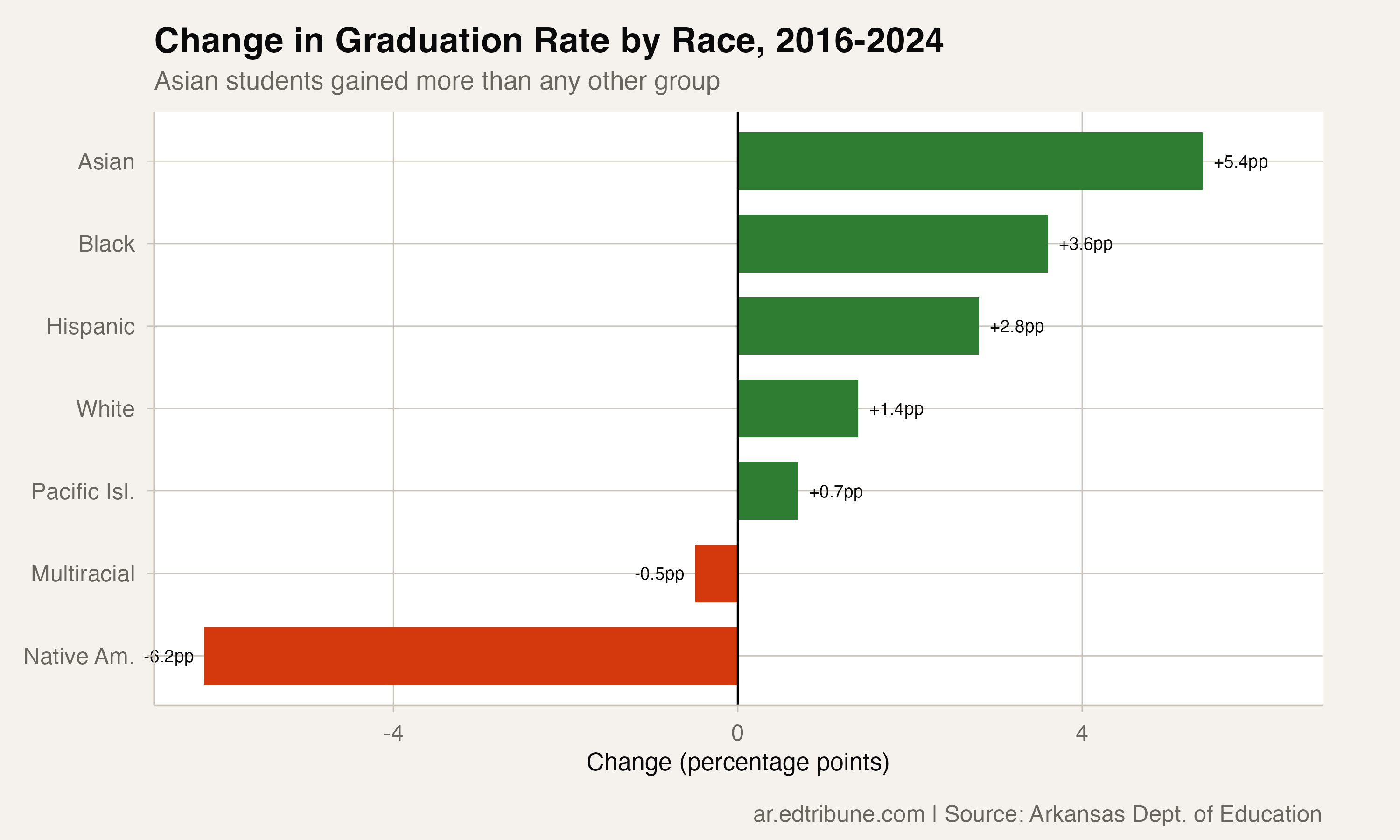
Asian students in Arkansas reached a 96.3% graduation rate in 2024, gaining 5.4 points since 2016, the largest improvement of any racial group.
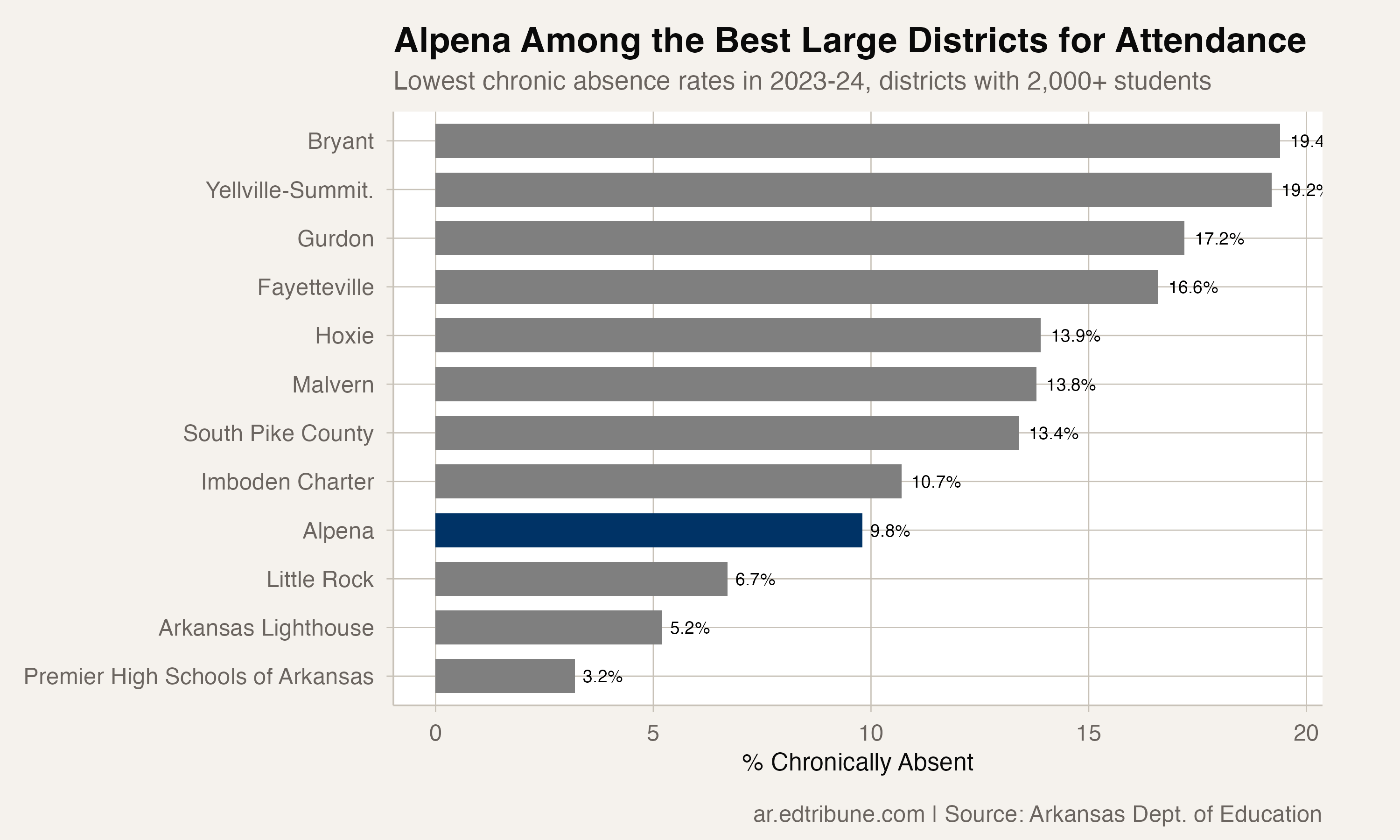
Alpena cut chronic absenteeism from 26% to under 10% across two consecutive years while 87% of Arkansas districts got worse. The rural district now outperforms its own pre-COVID baseline.
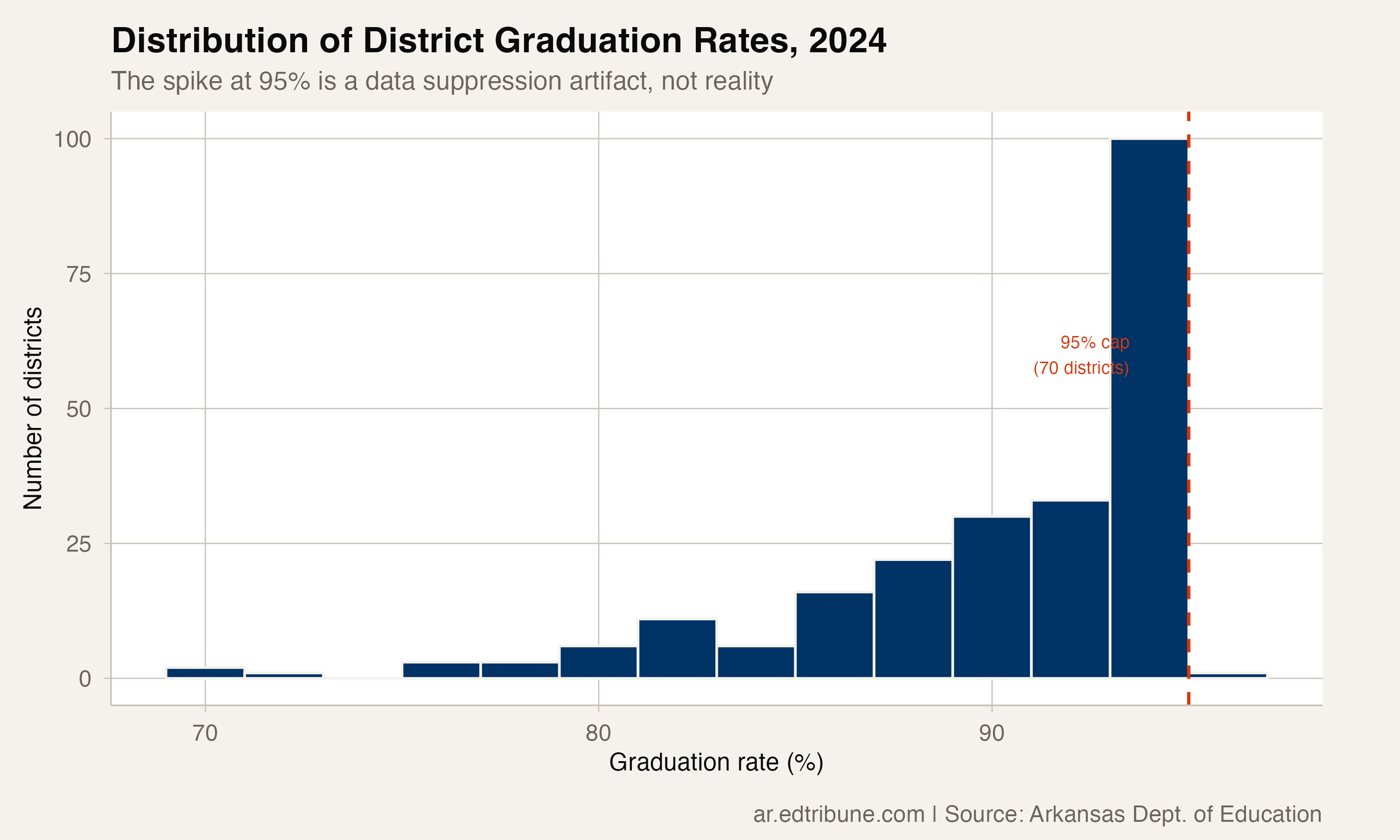
Nearly 30% of Arkansas districts report exactly 95.0% graduation rates, a data suppression artifact that hides true performance.
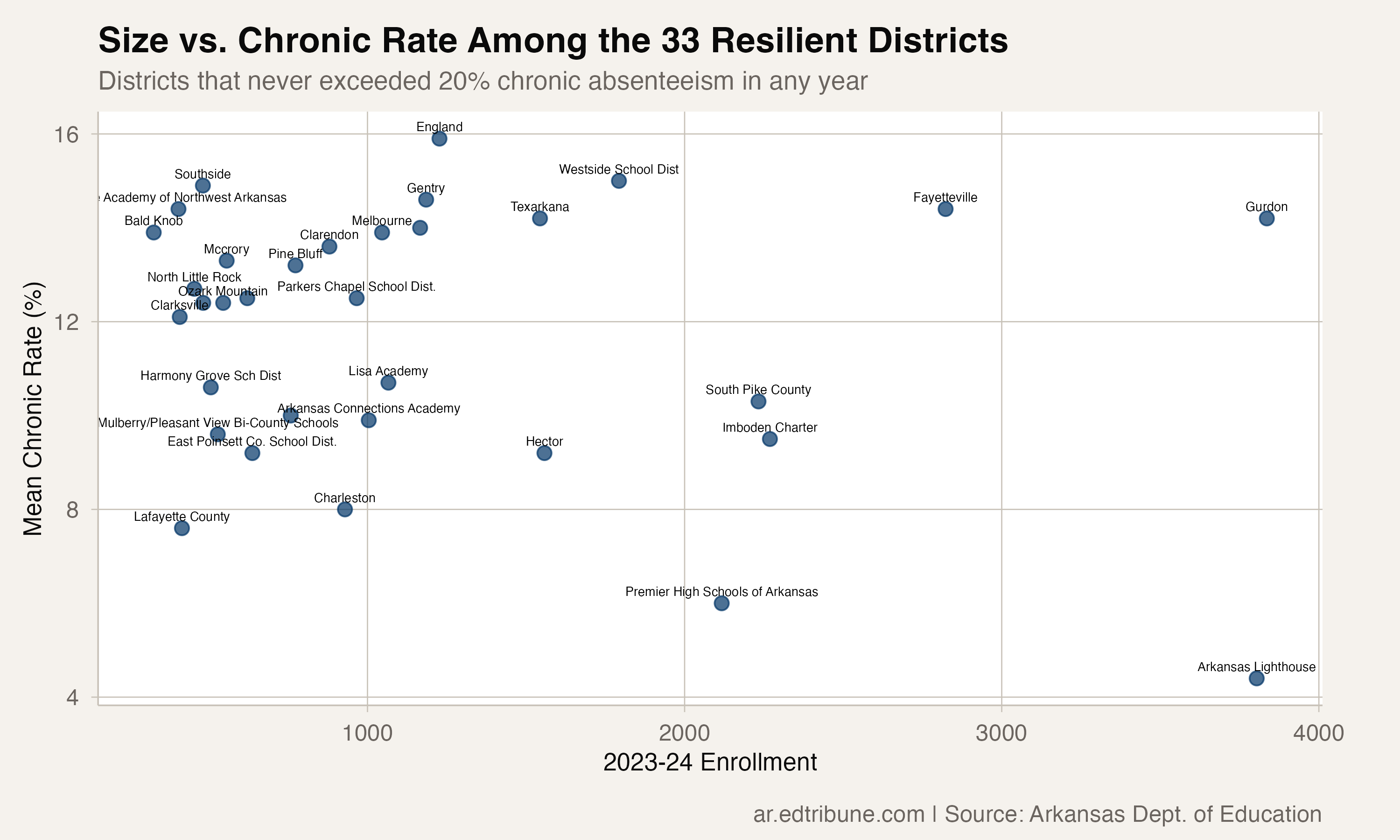
While Arkansas's statewide chronic absence rate lurched from 14% to 27%, 33 districts kept their rates below 20% in every single measured year — including the COVID spike.
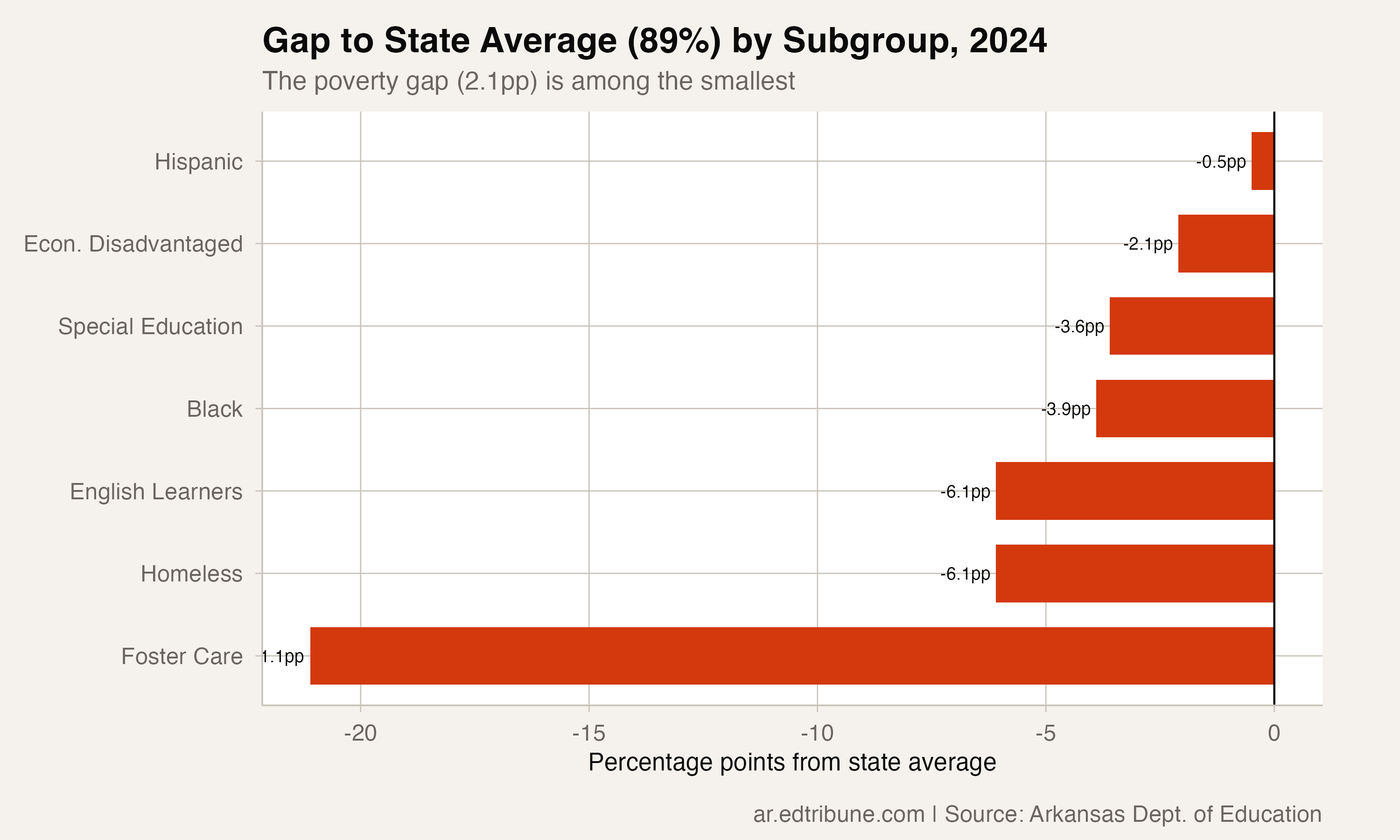
Economically disadvantaged students in Arkansas graduate at 86.9%, just 2.1 points below the state average, one of the narrowest income gaps in the nation.
Lincoln School District pairs every student with a mentor and operates on a 4-day week. The data confirms it works: chronic absence is back to its pre-COVID level of 9.3%.